
Mold Removal and Remediation in Idaho City, ID
IICRC S520 remediation: containment, negative air, HEPA cleaning, removal of affected porous materials, and clearance verification. We repair the moisture source, or it grows back.
- 24/7 emergency response
- IICRC certified · RCE-67387
- Locally owned · 10 years
A person answers 24 hours a day
Dispatching to Idaho City within about 2 hours.
Call Now: (208) 391-5248Arrival windows are estimates from our South Nampa dispatch, not guarantees. Call and we’ll give you a real time for your address.
What the work involves
The actual scope, in the order it matters. If a step is missing from someone’s bid, ask them why.
- Moisture investigation first: meters, thermal imaging, and a look at the crawlspace, roofline, bath fans, and plumbing to find what is feeding the growth.
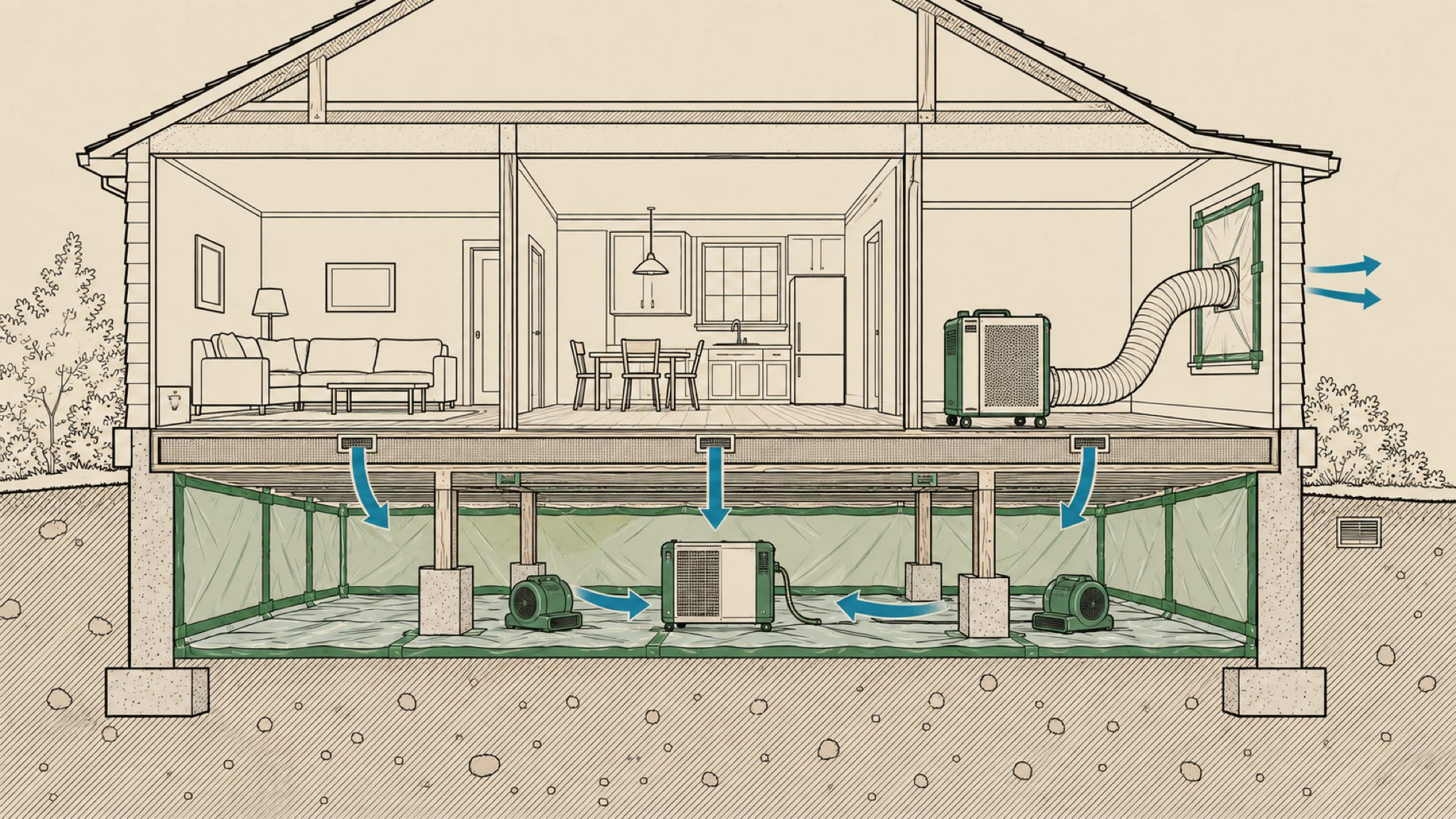
- Containment: sealed six-mil barriers, zippered entry, and negative air machines so the work area stays under pressure and spores do not travel to clean rooms.
- Removal of affected porous materials, cut back past the visible growth to a clean margin: drywall, insulation, carpet and pad, particleboard.
- HEPA vacuuming and damp wiping of the remaining structure, then HEPA air scrubbing of the whole containment.
- Antimicrobial application to cleaned surfaces where the scope calls for it.
- Post-remediation verification, including third-party clearance sampling when a sale, a lender, or an occupant health issue requires a document.
We do not sample. No air cassettes, no swabs, no lab report, and no clearance number signed by us. When a lender, a buyer's agent, or a physician needs a lab result, it goes to an independent inspector or an industrial hygienist who has no financial stake in the remediation and who invoices you directly. A company that both grades and performs the work has an obvious problem.
How the job runs
The same sequence on every loss. Knowing what happens next is most of what makes the first day survivable.
Find the water
Mold needs three things: moisture, organic material, and time. The only one you can take away is the moisture. Before containment goes up we find the source: a crawlspace with no vapor barrier, a slow supply leak, a roof penetration, a bath fan dumping into the attic.
Scope and containment
We define the affected area and seal it. Six-mil poly, zippered entry, and a negative air machine exhausting outside so air flows into the containment and never out of it. HVAC supplies and returns inside the work area get sealed so the system stops moving spores through the house.
Removal
Contaminated porous materials come out: drywall, insulation, carpet and pad, particleboard. Cuts extend past visible growth to a clean margin. Semi-porous framing that is structurally sound gets cleaned and, where specified, sanded or media blasted rather than replaced.
HEPA cleaning
Everything left inside the containment is HEPA vacuumed and damp wiped, then HEPA vacuumed again. Air scrubbers run through the cleaning and after it. Remediation is a cleaning job, not a spraying job. The spray is the last five percent.
Verification
Visual inspection, moisture readings on the materials that were wet, and where required, independent air or surface sampling for clearance. We do not test our own work and call it passed.
Fix the source, then rebuild
Vapor barrier, drainage, ventilation, or plumbing gets corrected before any drywall goes back. Skipping this step is why mold jobs get done twice.
A person answers 24 hours a day.
Where mold lives, and how remediation works
The growth you can see is rarely the whole story. This is what is happening inside the wall, and the containment sequence that keeps a one-room problem from becoming a whole-house one.
01
Where it starts
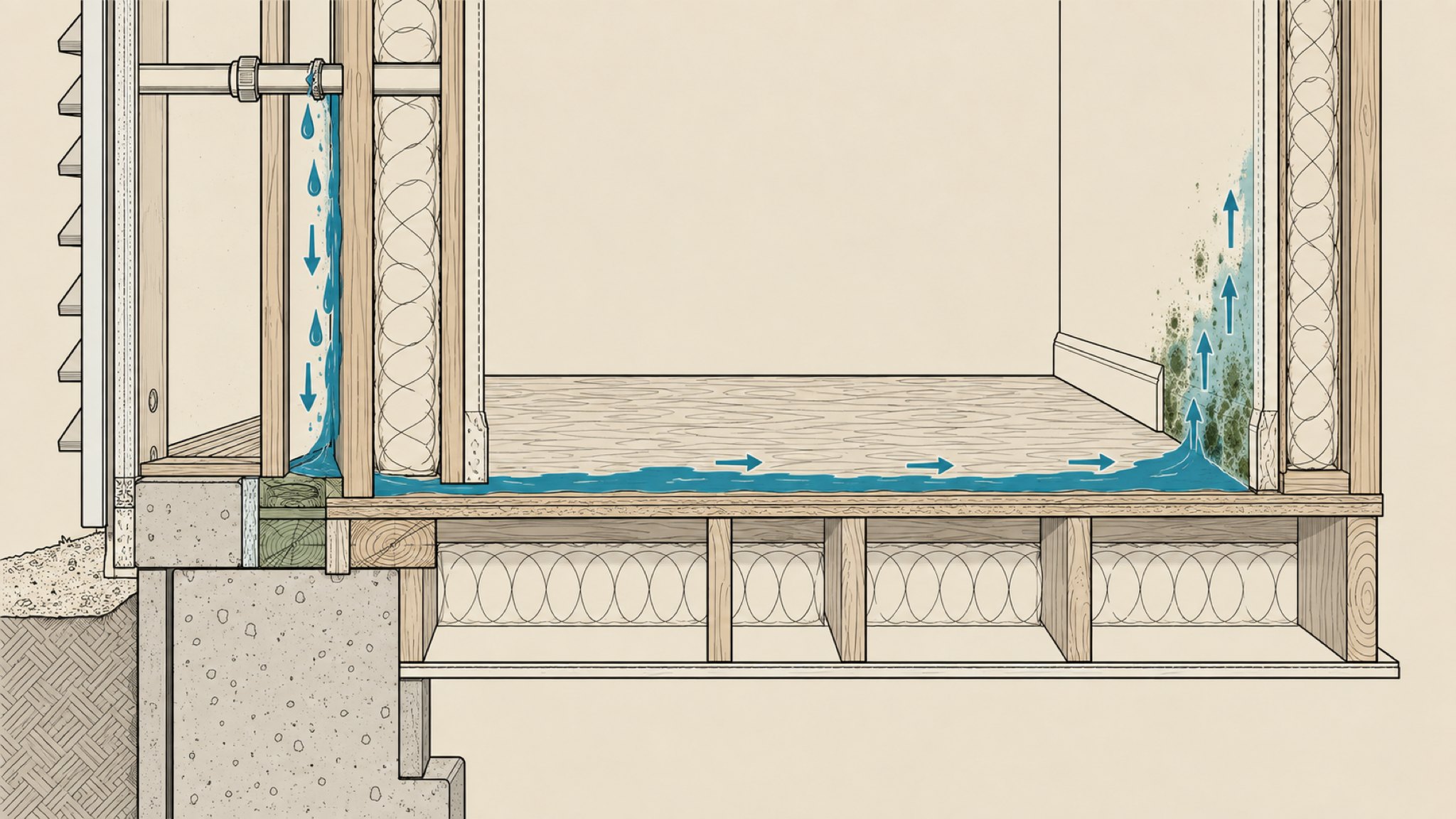
Mold is never the first event. Somewhere, water is getting where it should not be, here, a supply fitting weeping inside a wall, slowly enough that nobody notices. A cavity that stays damp for days is all it takes. Fix the moisture or the mold comes back; that is not a sales line, it is biology.
02
Growth where nobody can see it
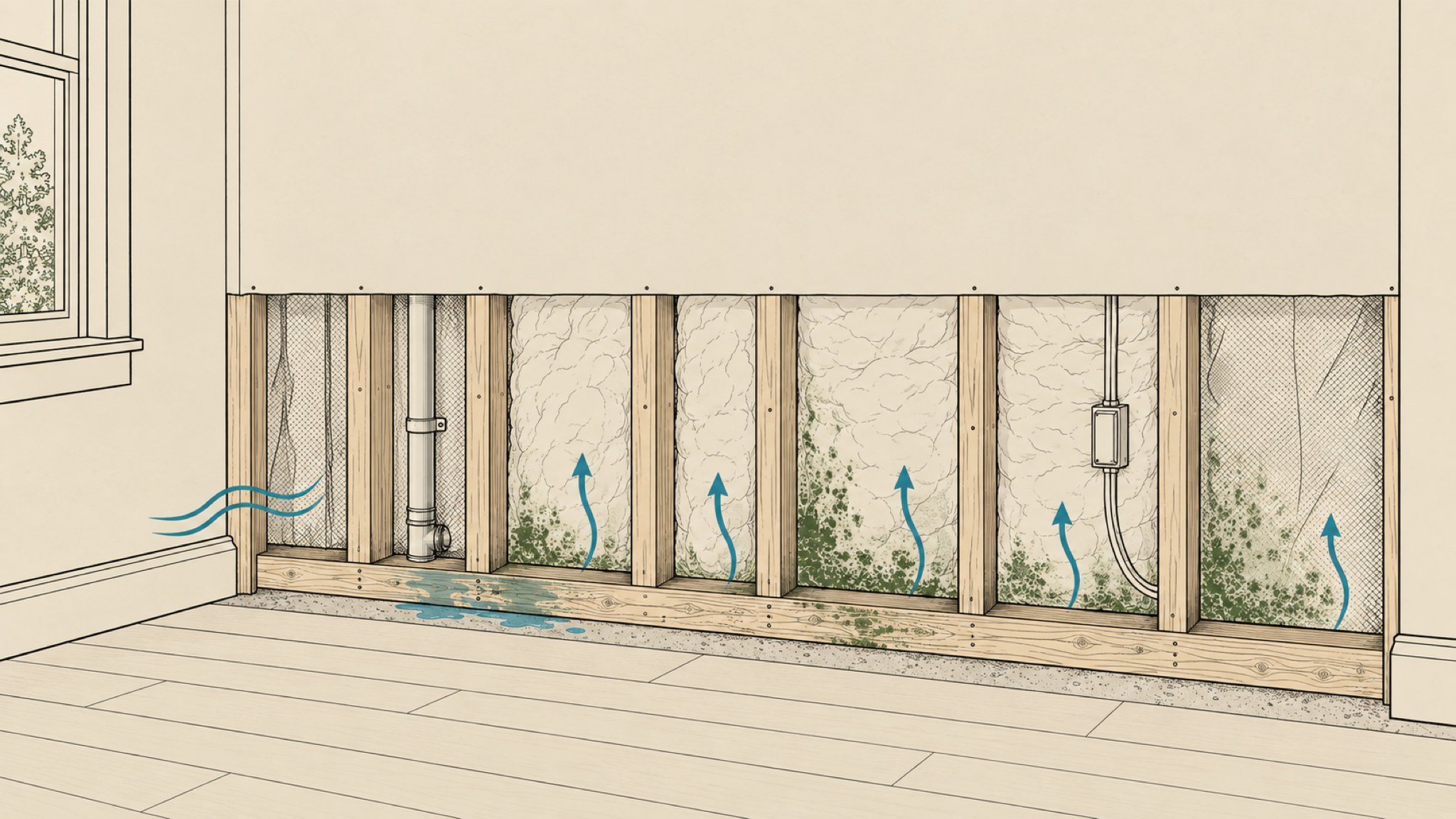
Growth starts on the cavity side of the drywall and the framing, paper and wood, exactly what it eats. From the room, the wall looks fine. By the time there is a musty smell or a shadow on the paint, the cavity side is usually well ahead of what is visible. This is why we open walls based on moisture readings, not on what shows.
03
How spores travel through a house
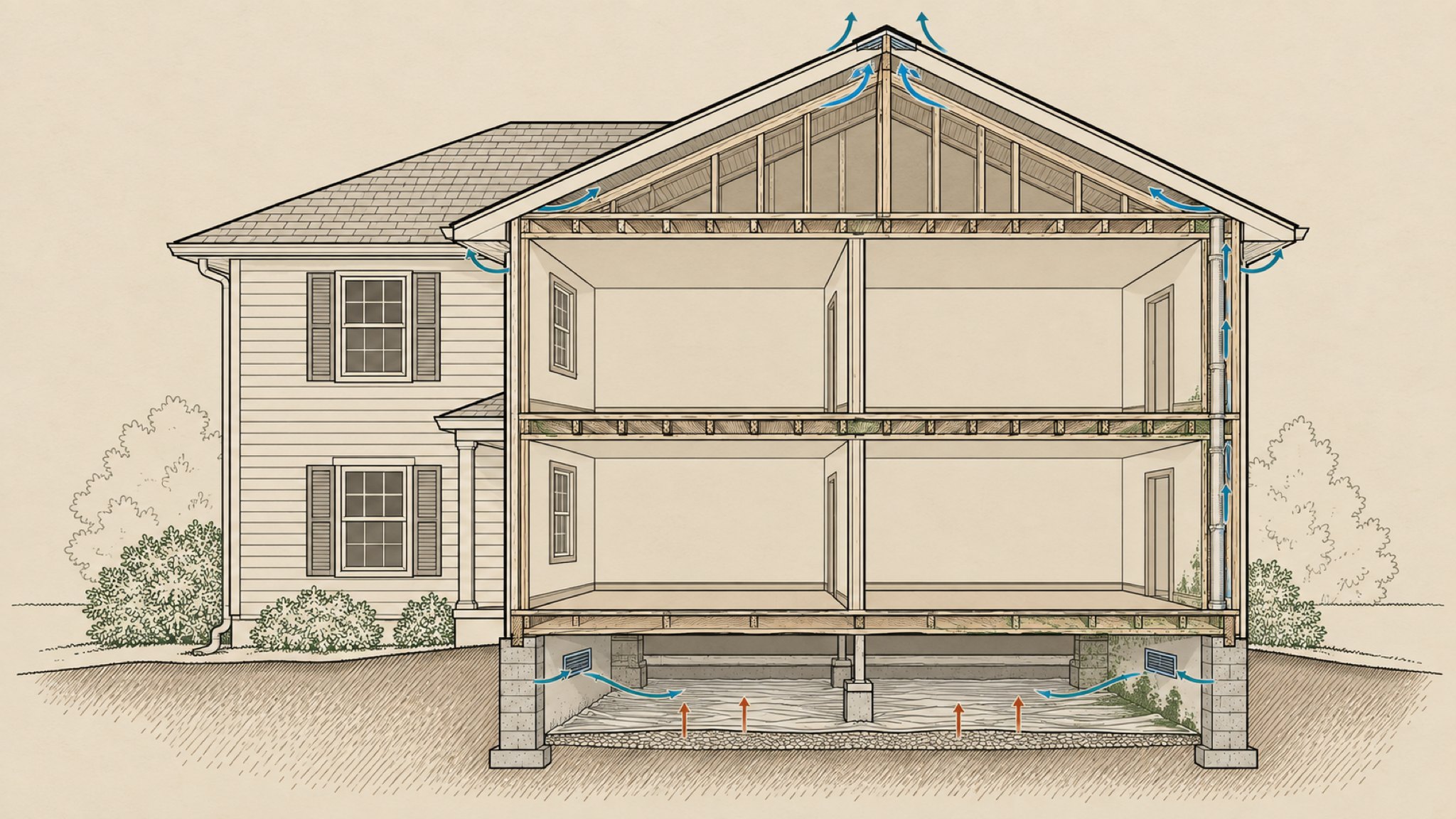
Air moves through a house constantly, through outlet gaps, baseboard cracks, and every return the HVAC pulls from. Spores ride that air. A colony in one wall cavity can seed dust through the whole duct system, which is why disturbing it without controls makes a one-room problem a whole-house problem.
04
Containment, before demolition
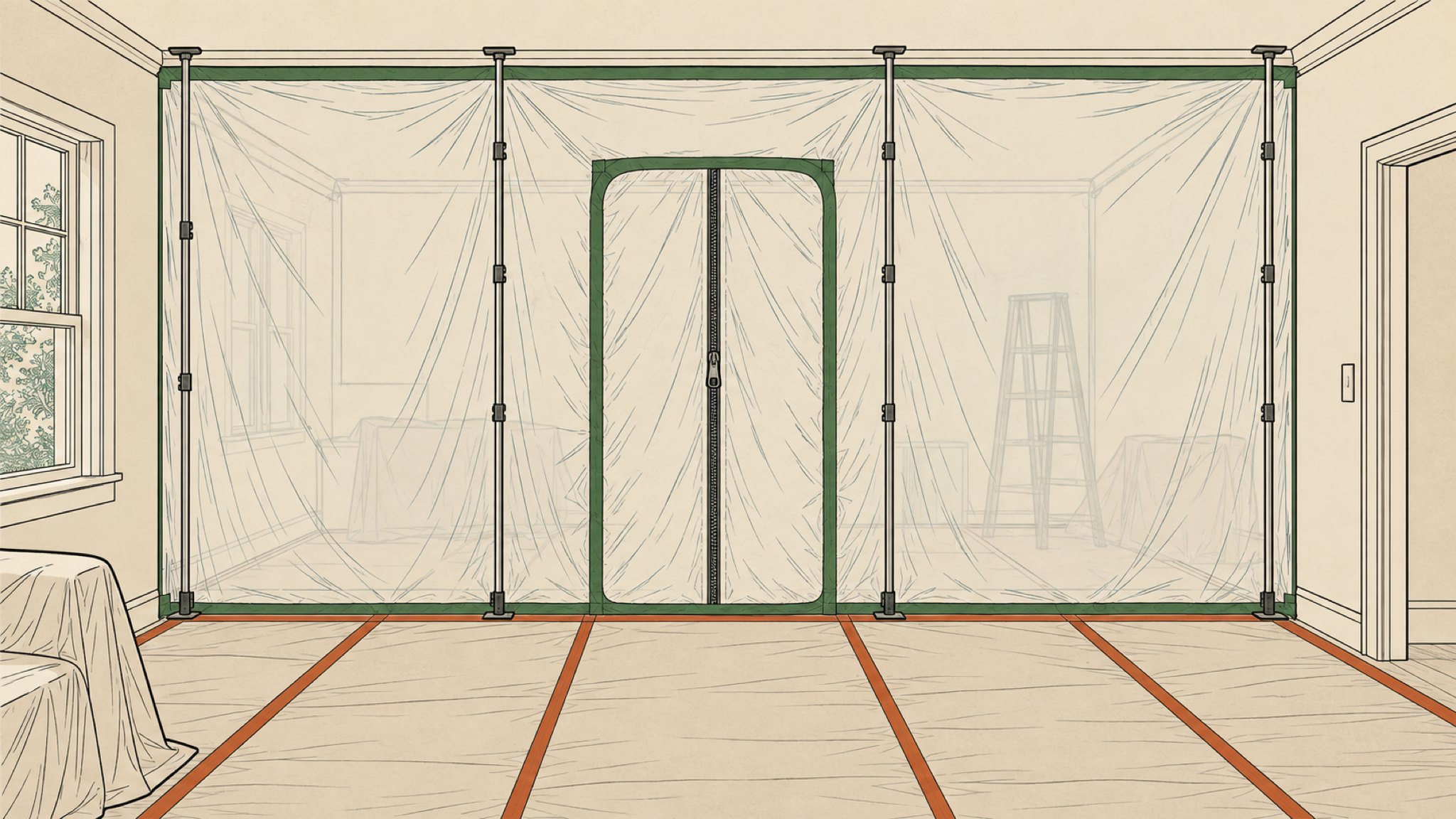
The work area gets sealed in 6-mil poly with a zipper door, taped tight, and the HVAC gets shut down with the registers sealed. Nothing gets demolished until the barrier is up. Clean containment is the difference between remediation and redistribution, it is also the easiest way to judge any contractor's work at a glance.
05
Negative air, verified
A HEPA-filtered negative air machine runs inside the containment and exhausts outside it, so air is always being pulled in through every seam, never leaking out. We verify the pressure with a manometer, not by feel. If the poly bows inward, the physics is working: whatever gets disturbed inside stays inside.
06
Removal and cleaning
Colonized drywall and insulation come out and are bagged at the wall, inside containment. Framing gets cleaned back to sound wood. HEPA vacuum, damp wipe, abrasion where it needs it. Spraying a coating over a colony does not remediate anything; it hides it, and it shows up again on the next inspection or the next humid month.
07
Clearance, then rebuild
Done means verified: the cavity dry, surfaces clean, and the air checked before the poly comes down rather than after it. Then the wall gets rebuilt. The order is the whole discipline: moisture fixed, contained, removed, verified, rebuilt. Skip a step and you paid to move the problem, not to end it.


Your job page
Every job gets a private page you can open from your phone. What we found, what’s running, and what happens next, updated as we work rather than when you call to ask. Documented while it happens, not after.
1,300+ moisture readings documented this year, across 38,000+ square feet of structural drying.
- Job page
- Your private link: status in plain language, photos, documents, and the next step on the schedule.
- Readings
- Wood, drywall and subfloor metered at the same marked points every day, with temperature, relative humidity and grains per pound logged beside each one. Day one to demobilization, on a sheet you can read.
- Photos
- Numbered and dated, tied to the job record, the same set your adjuster gets.
- Paper trail
- A written scope and estimate in the format adjusters and property managers expect, handed over with the complete file.
When to call us
If one of these is your situation, the clock matters more than the diagnosis. Call first; we’ll sort out the rest on the phone.
- There is a musty, earthy smell in a closet, a crawlspace, or in the first minute after the HVAC kicks on.
- You can see growth on drywall, on framing, or on the underside of the subfloor in the crawlspace.
- A leak sat for more than 48 hours, or got dried by someone who left no moisture readings behind.
- A home inspection flagged mold and you need it remediated and cleared before closing.
- You cleaned it with bleach and it came back in the same spot.
Not sure which one you have? Call and describe it.
What we see in Idaho City
Field notes on Idaho City: the housing stock, where the water comes from, and what that means for this work.
Idaho City sits at about 3,900 feet on Highway 21. The corridor between there and Boise is mountain homes and cabins, a large share of them occupied part-time: Robie Creek, Wilderness Ranch, Clear Creek, Mores Creek.
Part-time occupancy is the whole problem. A supply line or a pump line breaks in February in a house nobody is in and runs for days or weeks. What we're called to is rarely a wet floor; it's a saturated structure with active microbial growth.
Wells, pressure tanks and pump houses instead of city water. Those failures dump continuously and there's no meter at the curb to shut off, so we sort out the shut-down before we start moving water.
Wood heat and unconditioned crawlspaces are standard up there. Stack effect pulls ground moisture up through the floor all winter, and a good share of the 'we had a leak' calls turn out to be a long-running moisture problem the leak only made visible.
Winter access is real. Highway 21 gets snow and ice, and the side roads into the subdivisions often aren't plowed to the door. Ask on the phone what we can reach today and you'll get the actual answer, including the days when the actual answer is not yet.
Working across:Downtown Idaho City, Wilderness Ranch, Clear Creek, Robie Creek, Mores Creek
Questions we get
Straight answers, including the ones that occasionally talk someone out of hiring us.
Do I need a mold test or a mold inspection first?
Inspection, almost always. Testing tells you what species is present. An inspection finds the water, and the water is what sets the scope. We do not sample in-house. When a sale, a lender, a physician, or a smell with nothing visible calls for a lab result, we send you to an independent inspector with no stake in the remediation.
Does bleach kill mold on drywall or wood?
On tile or a tub surround, yes. On drywall, framing, or insulation, no. The growth is in the material rather than on it, and bleach wets the very thing feeding it. Porous material with mold in it gets removed. Framing gets cleaned, not sprayed.
Is black mold dangerous?
No more than any other mold, and the color does not change the work. The CDC's position is that the species does not need to be identified because all indoor growth is removed the same way. What sets the scope is how much material is affected and whether it is still wet. Symptoms in the house are a question for a physician. What we can answer is what is in the wall and how it comes out.
Does Idaho require a mold license?
No. Idaho has no mold license and no state cleanup standard, so "certified" on the side of a truck means whatever that company wants it to. Check three things instead: an Idaho contractor registration you can look up (ours is RCE-67387), IICRC S520 training held by the technicians on your job, and whether clearance testing goes to an independent party rather than the company grading its own work.
Do we have to move out?
Usually not. Containment and negative air keep the work area sealed off, so the rest of the house stays livable. If a job is large or central enough that staying would be impractical, we say so before it starts.
Does insurance cover mold?
Coverage follows the cause. Mold resulting from a covered water loss is often covered, usually up to a policy sublimit. Mold from long-term humidity, a failed vapor barrier, or deferred maintenance generally is not. The cause goes in the report either way, with the photograph and the readings behind it, so the coverage decision gets made on the actual source of the water and not a guess.
How long does remediation take?
A single bathroom or closet is typically one to two days of remediation. A crawlspace or a multi-room job runs three to five. Add a day or two if clearance sampling is required, for lab turnaround, and add more for the rebuild after clearance passes.
Related services
Mold Removal and Remediation in Idaho City, ID
A person answers 24 hours a day.