Storm Damage Cleanup and Repair in McCall, ID
Emergency tarping and board-up, debris removal, water extraction, and structural drying after wind, hail, ice dams, and spring runoff.
- 24/7 emergency response
- IICRC certified · RCE-67387
- Locally owned · 10 years
A person answers 24 hours a day
Dispatching to McCall same day, we'll give you a real arrival window.
Call Now: (208) 391-5248Arrival windows are estimates from our South Nampa dispatch, not guarantees. Call and we’ll give you a real time for your address.
What the work involves
The actual scope, in the order it matters. If a step is missing from someone’s bid, ask them why.
- Emergency roof tarping and board-up to stop water coming in tonight, before any permanent repair is scheduled.
- Extraction and structural drying of water that entered through the roof, windows, window wells, or foundation.
- Debris and downed limb removal from the structure, the roof, and access paths.
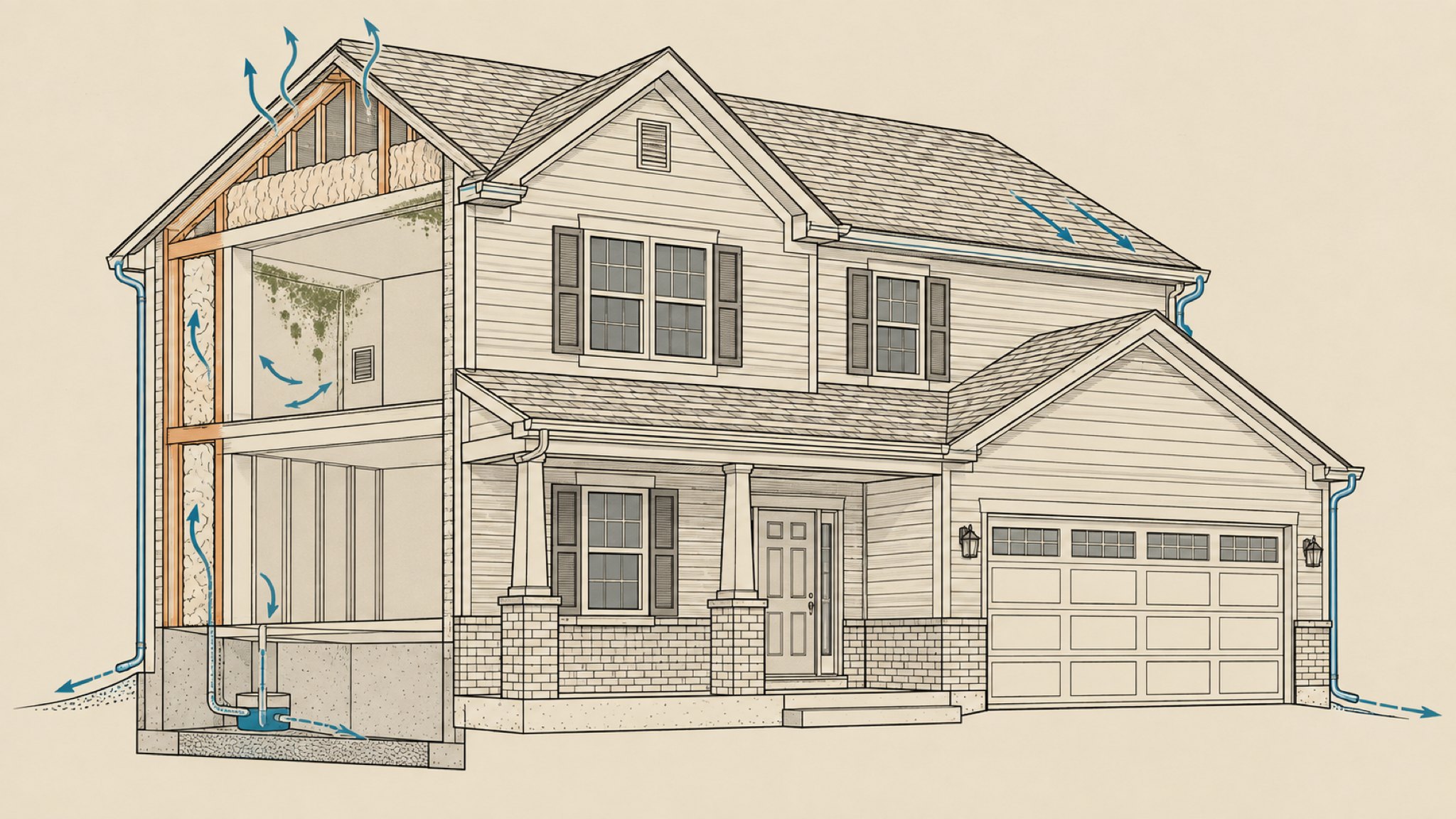
- Ice dam damage: interior drying at the eaves, removal of saturated blown-in insulation, and drying of ceiling and wall cavities.
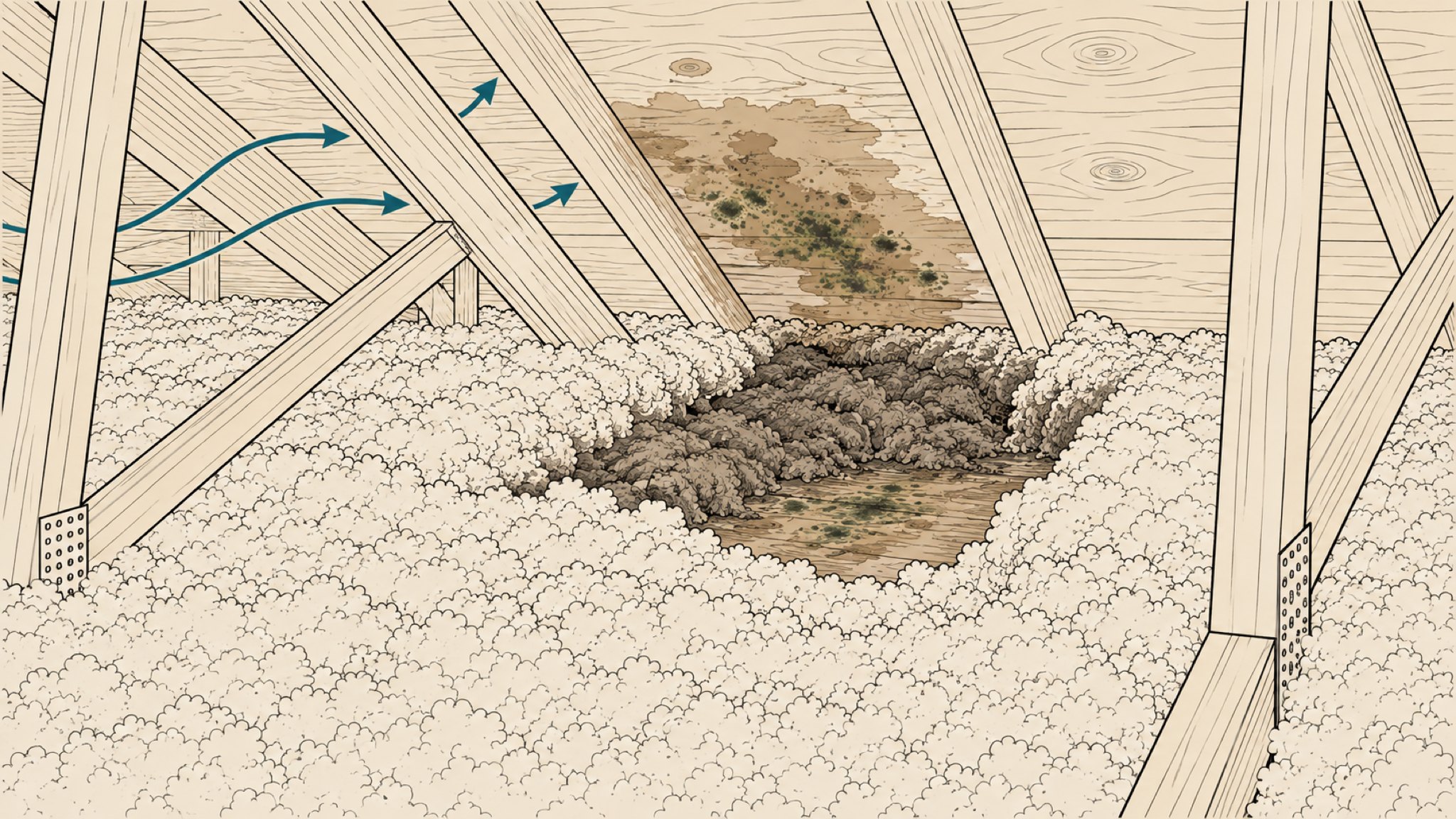
- Attic and insulation work. Wet blown-in insulation holds water, loses R-value permanently, and does not dry in place.
- Claim documentation tied to the storm date: photos, moisture maps, and a written scope your adjuster can match to the weather record.
We do not replace roofs. We tarp the opening, trace where the water went, and dry and repair the inside. The shingles, the deck, and the flashing belong to a roofing contractor, and our tarp is a bridge to that work rather than a substitute for it. If the only damage you have is on the roof itself, call a roofer first and skip us entirely.
How the job runs
The same sequence on every loss. Knowing what happens next is most of what makes the first day survivable.
Stabilize the building
Tarp the roof, board the openings, and stop active intrusion. Every hour a building stays open is more wet material, and most policies expect you to mitigate as a condition of coverage.
Find where the water went
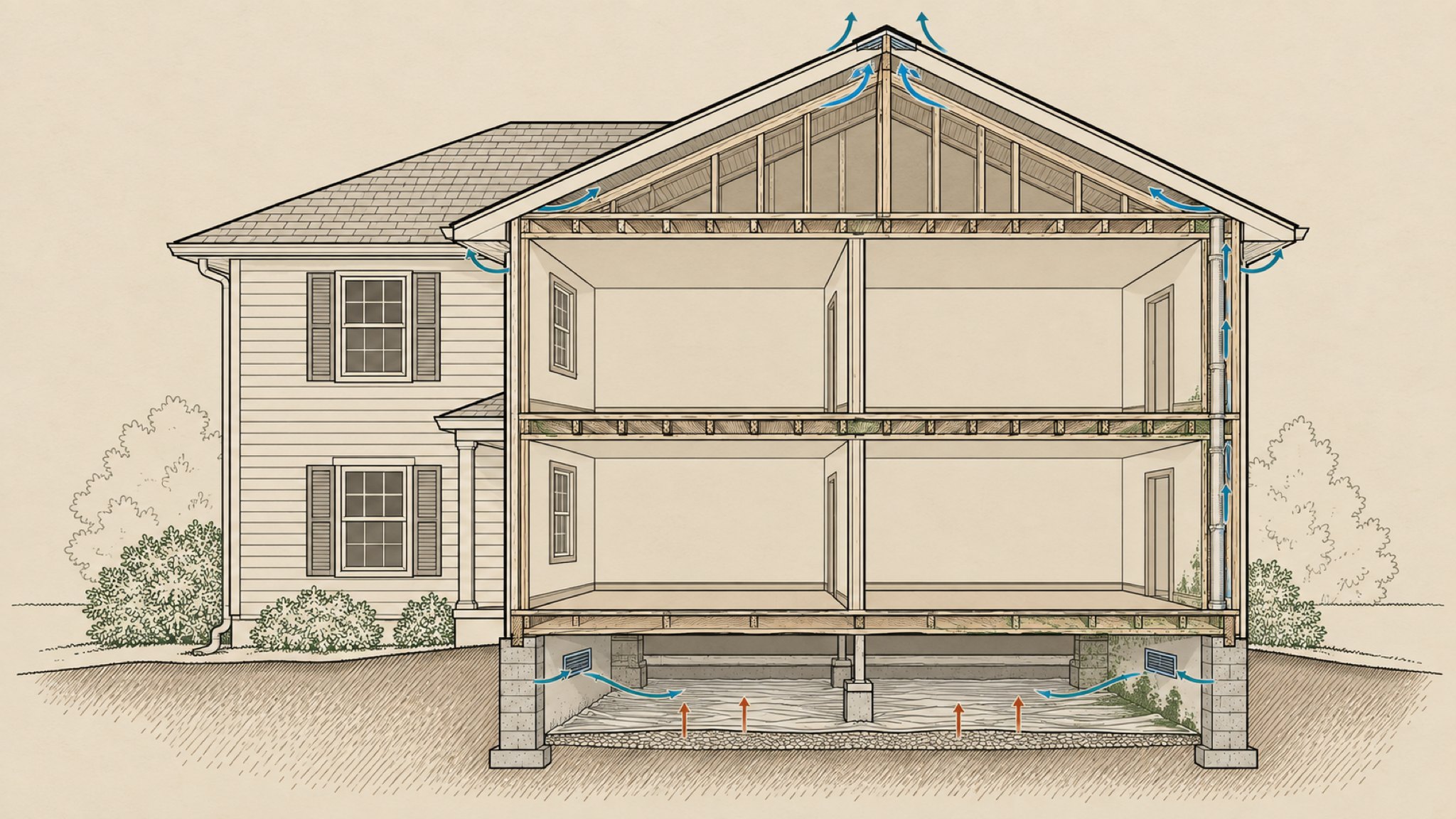
Water that comes through a roof does not stay at the roof. It runs down top plates, into wall cavities, along ceiling joists, and shows up two rooms away. Thermal imaging and meters map the actual path before drying equipment is placed.
Debris removal and demolition
Limbs, shingles, and broken material get cleared. Saturated insulation, wet drywall, and damaged ceiling material come out, because attic insulation in particular will not dry in place no matter how much equipment you put under it.
Structural drying
Air movers and LGR dehumidifiers, daily moisture readings, and a dry standard taken from unaffected areas of the same building. Same process as any water loss. A storm just changes how the water got in.
Repair and coordination
Interior repairs, drywall, and finishes are ours. Permanent roof replacement is a roofing contractor's work, and we coordinate the schedule so the interior does not sit open waiting on a roof crew.
A person answers 24 hours a day.
From the roof down
Storm damage starts at a lifted shingle and ends at a bedroom ceiling. This is the path in between, and what a proper tarp-up and dry-out look like.
01
The roof takes the hit
Valley wind gets under shingle edges and lifts them; hail bruises the mat under granules that still look fine from the ground. The opening a storm makes is usually small, a lifted tab, a creased ridge cap, which is exactly why it gets missed until the water shows up somewhere else.
02
Water finds the opening
Wind-driven rain does not need much. The usual doors in are flashing, chimney, valleys, vent boots, and the eaves. Once inside, water runs along rafters and framing before it drops, so where it lands is rarely below where it entered. Finding the entry point is meter work, not guesswork.
03
The attic soaks first
Blown-in insulation drinks whatever comes through, mats down flat, and quits insulating, then holds that water directly on the ceiling below. Nobody looks in their attic after a storm, so this stage runs quietly for days. If a storm was loud enough to remember, the attic is worth a look.
04
Then the ceiling shows it
The stain on the bedroom ceiling is the last event in the chain, not the first. A ring means the leak has wet and dried more than once; a sag means the drywall is holding water right now, do not stand under it, and do not poke it over the bed. By the time paint shows anything, the insulation above has been wet a while.
05
The whole chain at once
Pull back. One lifted tab and one opened flashing seam, and there is water in the roof deck, the insulation, and the bedroom ceiling. From the yard the house looks fine. That is storm damage: the entry is small, the spread is not, and none of it shows from the ground.
06
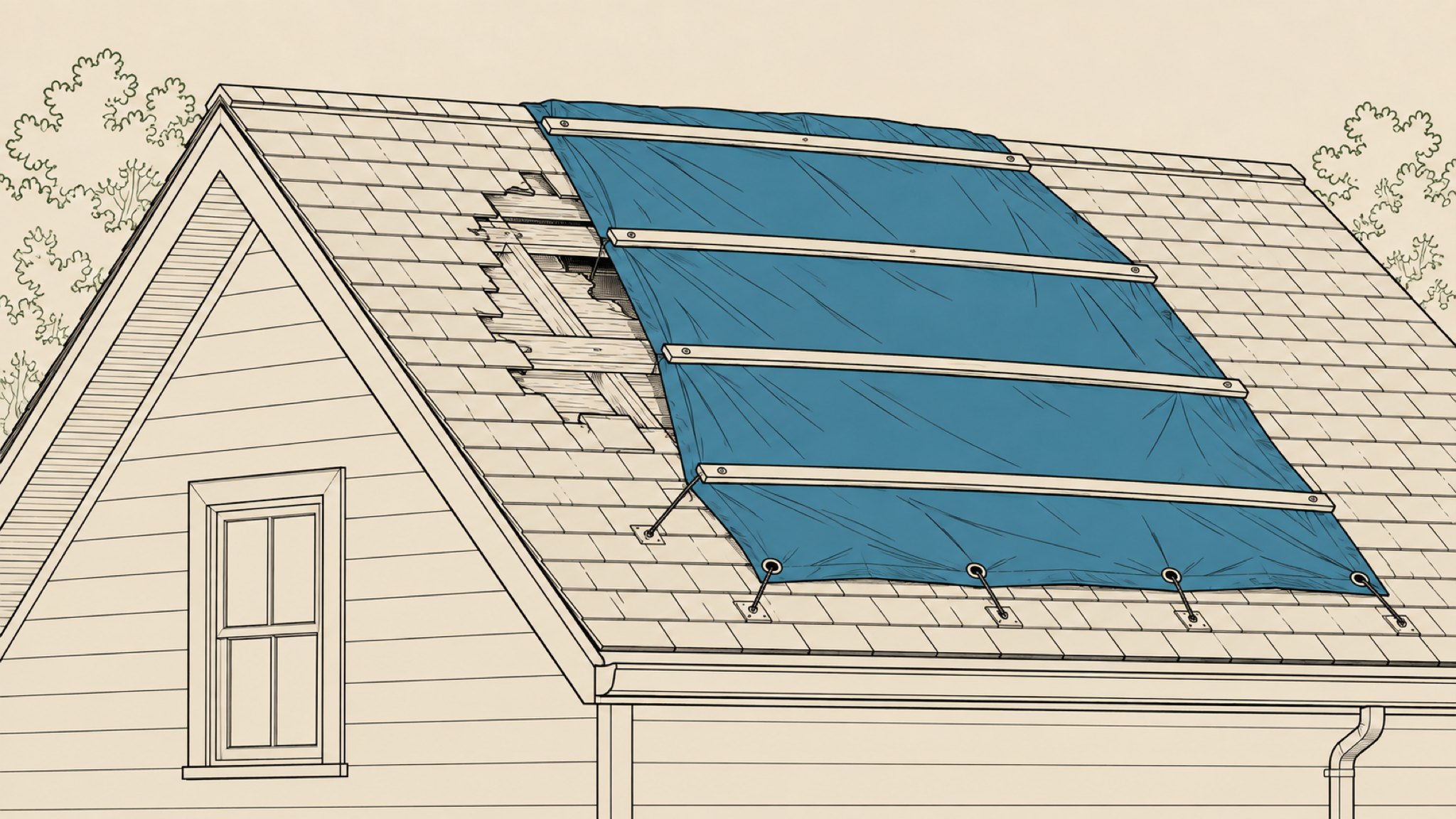
The tarp
A tarp that holds runs past the ridge so water cannot get above it, and it gets battened, furring strips fastened through, not bricks and hope. A loose tarp becomes a sail in the next wind and makes its own damage. This buys weeks for the roof work to be scheduled properly; it is mitigation your carrier expects to see.
07
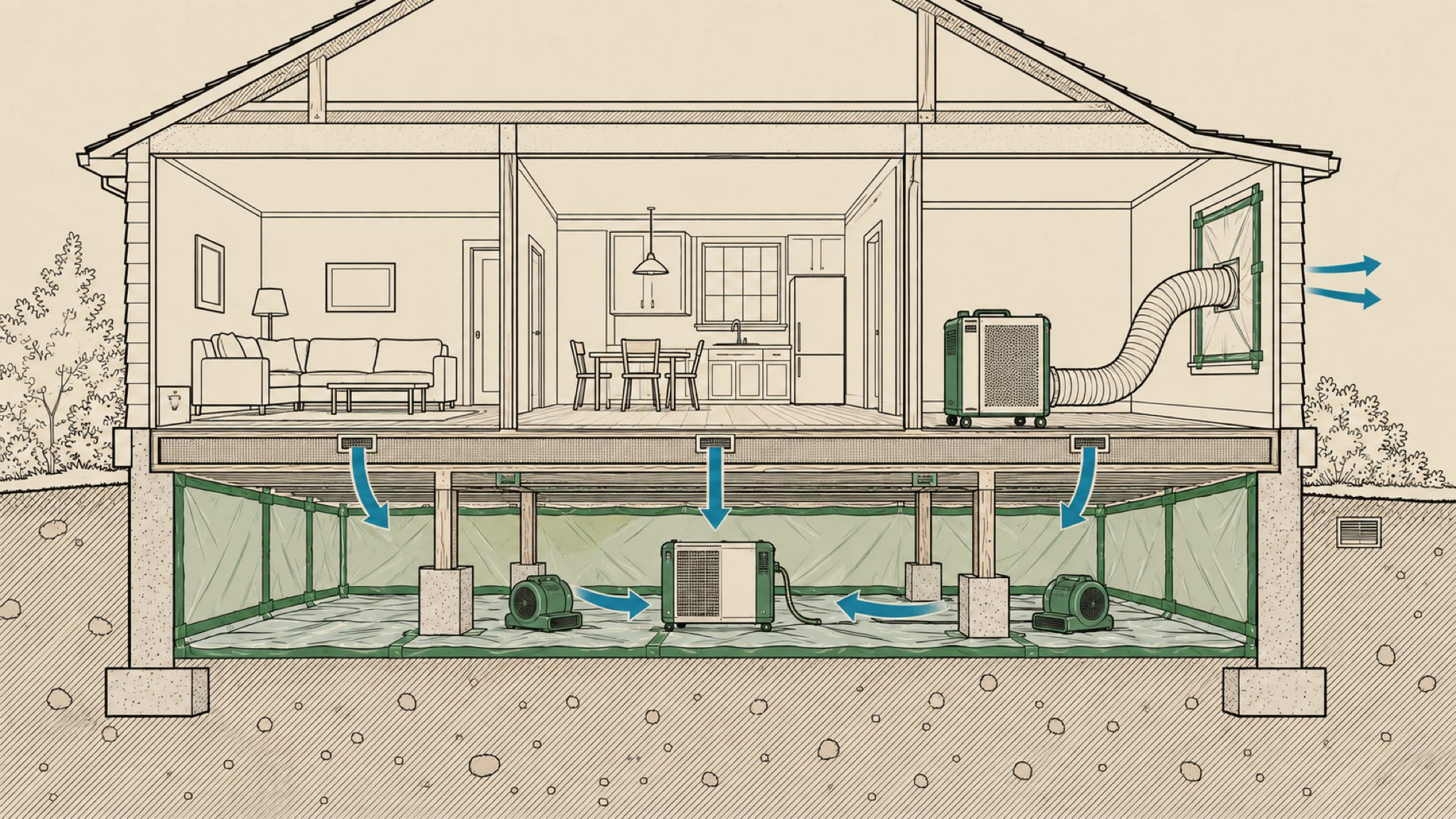
The inside dries on a meter
Wet insulation comes out, and what stays gets dried with airflow and dehumidification until the framing and ceiling read dry on the meter, attic wood does not get the benefit of the doubt. Dried to the touch is how attics grow mold above bedrooms; dried to documented readings is the standard we sign.
08
Repair, coordinated
The roof is a roofer's job; the water damage inside is ours, and you should not have to referee between the two. We work with your roofer or bring one we trust, and both scopes land in one documented claim file: photos, readings, dry logs. One event, written up once, in the format your carrier reads every day.


Your job page
Every job gets a private page you can open from your phone. What we found, what’s running, and what happens next, updated as we work rather than when you call to ask. Documented while it happens, not after.
1,300+ moisture readings documented this year, across 38,000+ square feet of structural drying.
- Job page
- Your private link: status in plain language, photos, documents, and the next step on the schedule.
- Readings
- Wood, drywall and subfloor metered at the same marked points every day, with temperature, relative humidity and grains per pound logged beside each one. Day one to demobilization, on a sheet you can read.
- Photos
- Numbered and dated, tied to the job record, the same set your adjuster gets.
- Paper trail
- A written scope and estimate in the format adjusters and property managers expect, handed over with the complete file.
When to call us
If one of these is your situation, the clock matters more than the diagnosis. Call first; we’ll sort out the rest on the phone.
- Wind lifted shingles and a brown ring showed up on the ceiling during the next rain.
- Ice built up at the eaves and water is running down the inside of an exterior wall during a thaw.
- Spring runoff or a plugged window well pushed water into a daylight basement.
- A limb or a tree came through the roof and the building is open to the weather.
- Heavy snow load caused a roof, carport, or outbuilding to sag or fail.
Not sure which one you have? Call and describe it.
What we see in McCall
Field notes on McCall: the housing stock, where the water comes from, and what that means for this work.
McCall's biggest single loss category is the unoccupied second home. A supply line lets go in January, nobody is in the building, and the call comes from a property manager or a neighbor days or weeks later. By then there is nothing left to extract. It is a structural drying and remediation job from the first hour.
Ten feet of snow a year is normal. Ice dams at the eaves push meltwater back under the roofing into the top plate and down the wall cavity, and snow sliding off steep metal roofs tears at vents, flashing and anything mounted on the wall below.
Short-term rentals are a large share of the housing around Payette Lake. Those jobs have to move because every day down is a cancelled booking, and the owner is usually out of state making decisions off photos and moisture logs.
Property managers and caretakers are the people who actually find the damage here. They're the ones who call, and they need to see progress on a job they're responsible for but not standing in.
It's a real drive up Highway 55 and 55 has weather closures and delays. We give McCall callers an honest arrival window and tell them what to do in the meantime rather than quoting a valley response time we can't hit.
Working across:Downtown McCall, Payette Lake, Warren Wagon Road, Eastside Drive, Spring Mountain Ranch, Whitetail
Questions we get
Straight answers, including the ones that occasionally talk someone out of hiring us.
Do you do the roof repair too?
We tarp, we dry the interior, and we do the interior repairs. Permanent roof replacement is a roofing contractor's scope. We work with roofers across the valley every week and can coordinate directly so the tarp comes off the day the new roof goes on.
What causes ice dams, and is the damage covered?
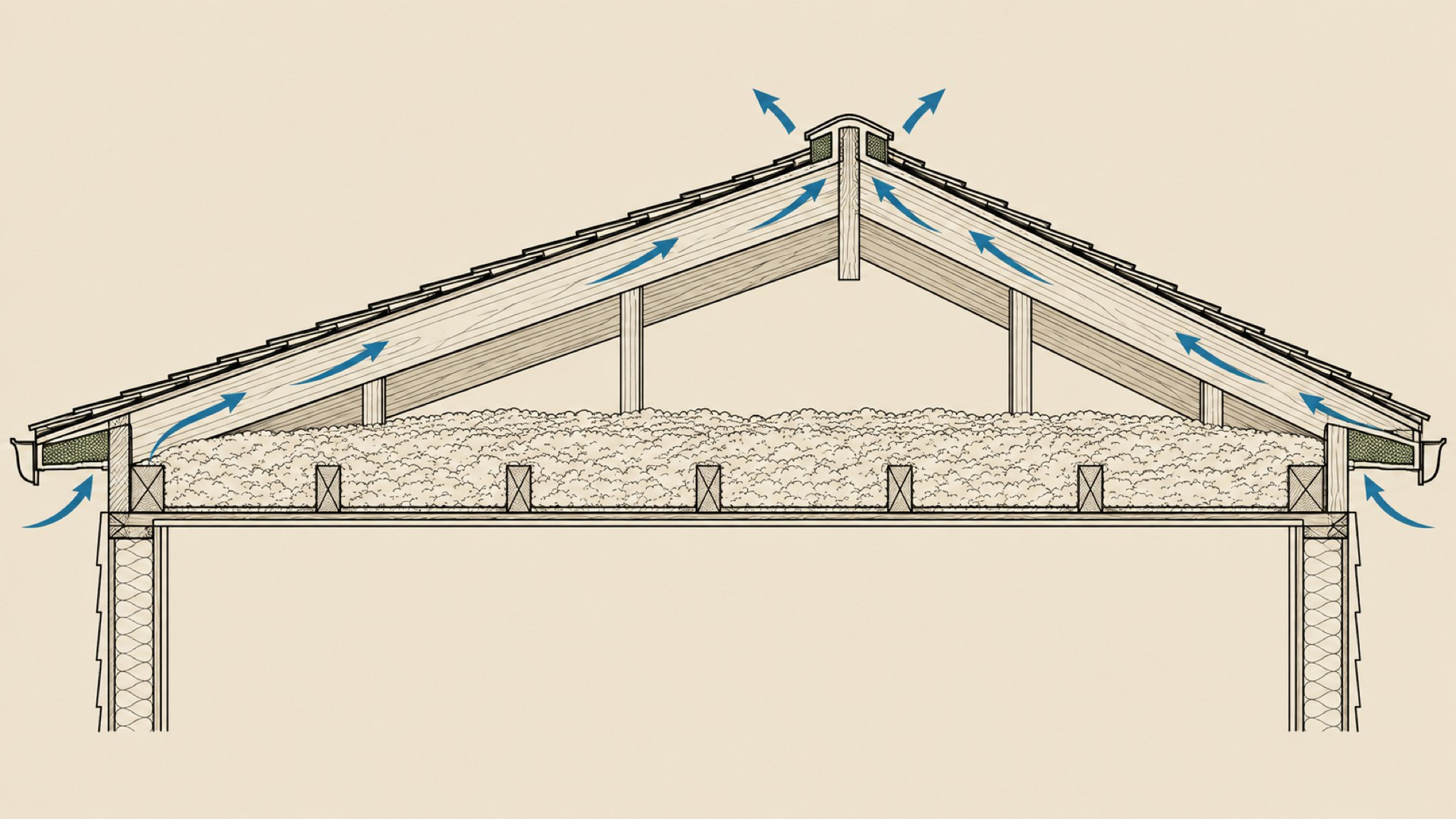
Heat escaping into the attic melts snow on the upper roof, the water runs down to the cold eave, refreezes, and backs up under the shingles. Sudden interior water damage from an ice dam is usually covered. The underlying attic insulation and ventilation problem is maintenance, and fixing it is what stops it recurring.
A neighbor's tree fell on my house. Whose insurance pays?
Generally your own policy responds to damage to your structure, regardless of whose tree it was, and your carrier may pursue the neighbor's insurer afterward. Do not wait on that question to mitigate. The policy expects you to secure the building immediately either way.
How soon should I call after a storm?
As soon as the building is safe to approach. Tarping and board-up are what limit the loss, and they are also the part of the claim that documents you acted. Waiting a week turns a wet-drywall job into a mold job.
Does wet attic insulation need to be replaced?
Yes, in the affected area. Blown-in cellulose and fiberglass mat down when saturated, lose R-value permanently, and hold moisture against the ceiling drywall. It gets removed, the cavity gets dried, and new insulation goes back after the drying is verified.
Related services
Storm Damage Cleanup and Repair in McCall, ID
A person answers 24 hours a day.